


Sign In to Your Account
Subscribers have complete access to the archive.
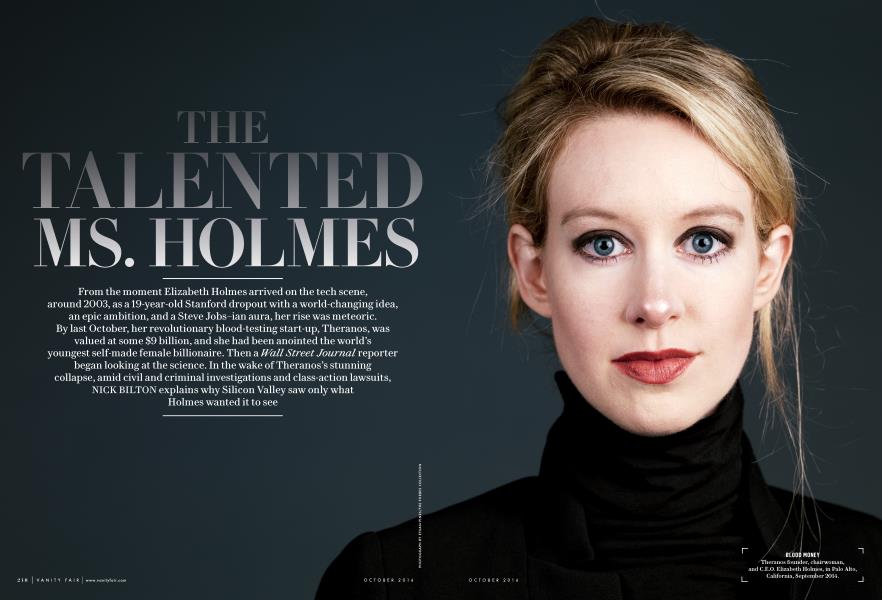
Sign In Not a Subscriber?Join NowFrom the moment Elizabeth Holmes arrived on the tech scene, around 2003, as a 19-year-old Stanford dropout with a world-changing idea, an epic ambition, and a Steve Jobs-ian aura, her rise was meteoric. By last October, her revolutionary blood-testing start-up, Theranos, was valued at some $9 billion, and she had been anointed the world's youngest self-made female billionaire. Then a Wall Street Journal reporter began looking at the science. In the wake of Theranos's stunning collapse, amid civil and criminal investigations and class-action lawsuits, NICK BILTON explains why Silicon Valley saw only what Holmes wanted it to see
From the moment Elizabeth Holmes arrived on the tech scene, around 2003, as a 19-year-old Stanford dropout with a world-changing idea, an epic ambition, and a Steve Jobs-ian aura, her rise was meteoric. By last October, her revolutionary blood-testing start-up, Theranos, was valued at some $9 billion, and she had been anointed the world's youngest self-made female billionaire. Then a Wall Street Journal reporter began looking at the science. In the wake of Theranos's stunning collapse, amid civil and criminal investigations and class-action lawsuits, NICK BILTON explains why Silicon Valley saw only what Holmes wanted it to see




Subscribers have complete access to the archive.
Sign In Not a Subscriber?Join Now